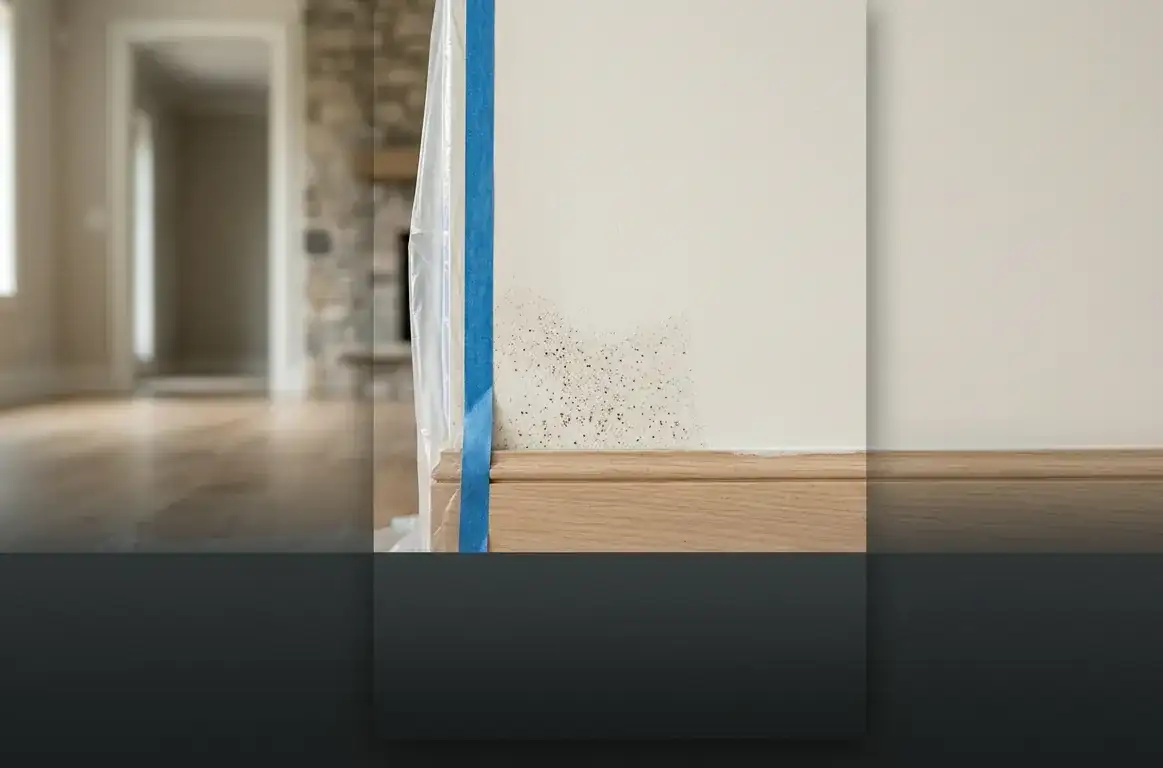
Mold Remediation.
Mold inspection, containment, removal, and air quality testing across Long Island and NYC. We find the source, fix it, and verify clearance.
Submit a Request →Inspection & Testing
Mold isn't always visible. Our certified inspectors use air sampling, surface testing, and moisture mapping to identify mold, and the moisture source causing it, often an unresolved water-damage issue, before remediation begins.
Air Quality Sampling
Laboratory analysis of airborne mold spore counts and species.
Surface Testing
Tape lift and swab samples from visible growth areas.
Moisture Mapping
Thermal imaging to find hidden moisture feeding mold growth.
Full Inspection Report
Detailed findings with remediation scope and recommendations.
Remediation & Clearance
Remediation follows strict containment and removal protocols. Every job ends with post-clearance air testing, so you know the mold is gone before the crew leaves.
Negative Pressure Containment
Isolate affected areas to prevent cross-contamination.
HEPA Vacuuming & Removal
Remove all mold-affected materials safely and thoroughly.
Antimicrobial Treatment
Apply EPA-registered treatments to prevent regrowth.
Post-Clearance Testing
Independent air quality verification before job completion.
Moisture Source Correction
Fix the underlying moisture problem to prevent recurrence.
Insurance Documentation
Full documentation for homeowner's insurance claims.
Frequently Asked Questions
How do I know if I have black mold or regular mold?
You can't tell by color alone. Many mold species look black or dark green, and "black mold" (Stachybotrys) can vary in appearance. Only laboratory testing identifies the species with certainty. What matters more than the species is the extent of growth, the materials affected, and whether the moisture source has been found and fixed. Any visible mold growth warrants a professional inspection regardless of its color.
How much does mold remediation cost on Long Island?
Mold remediation on Long Island typically ranges from $500 to $1,500 for a small, contained area (like a bathroom) up to $6,000 or more for widespread contamination affecting framing, insulation, and multiple rooms. The cost depends on the size of the affected area, the materials involved, and how much reconstruction is needed afterward. The remediation companies we match you with provide a written scope and estimate after inspection.
Can I just clean the mold myself with bleach?
Bleach isn't an effective fix for mold on porous materials like drywall, wood, or insulation. It addresses surface discoloration but doesn't reach the mold roots that have penetrated the material, so the mold regrows. Disturbing mold without containment also spreads spores to other areas. Small surface mold on non-porous tile can be cleaned with the right product, but anything on porous materials needs professional remediation.
Does homeowners insurance cover mold remediation?
It depends on the cause. When mold results from a sudden, covered event (like a burst pipe or a storm-driven leak that was addressed promptly), remediation is often covered. Mold from long-term, unaddressed moisture or poor maintenance is usually excluded, and some policies cap mold coverage with a specific sublimit. Documenting the link between the water event and the mold is key, and the crews in our network handle that documentation for your claim.
Will the mold come back after remediation?
Properly done remediation that identifies and corrects the moisture source produces lasting results. Mold needs moisture to grow, so removing the moisture and the existing contamination removes the conditions for it to return. Mold comes back when remediation is incomplete or when the underlying moisture problem isn't fixed. That's why moisture source correction and post-clearance testing are essential parts of any real remediation, not optional extras.
Found Mold? We Can Help.
Submit your request and we'll schedule an inspection and give you a clear remediation plan.